Out of all the horses in this ‘race to the apocalypse’, economic collapse may be the first horse to reach the finish line.
“The pandemic was bad enough and highlighted how certain groups of people were going to be worse affected, the poor, minorities and so on. But the combination of energy and food shocks are a tipping point that will push Western societies over the edge. This will impact everyone. Well-to-do middle classes will find it hard to afford staple foods and pay bills. So we are anticipating dangerous levels of civil unrest that could spiral into an unprecedented social crisis.”
Complex systems are complicated. The interaction of many complex systems – climate, ecology, economy, and society, is more so. It is natural and normal for the human mind to look for signs of certainty. Two things that are certain is the absolute certainty of collapse and with it, an uncertain future. Finding shared purpose and a sense of solidarity is essential if we are to navigate the fear that this inspires. #TalkCollapse for a #JustCollapse
Defence strategists and military experts are amongst those who recognise the severity of our predicament. Yet, ‘doomer’ is still used by some in the climate movement to denigrate and ridicule collapse-conscious citizens.
In new research, defence strategist Dr Elizabeth G. Boulton, argues ‘that we are moving toward “a shift to a climate inhospitable for most forms of life” that will bring ecological collapse, violence, hardship, and death on nearly unimaginable scales’, with only 6 months to plan a whole-of-planet, man, women and child, ‘hyper-response’.
A doomer? No, a clear-eyed realist unafraid to speak the truth.
Collapse: ‘the fall of a socio-ecological system characterized by the loss of complexity, structure and order’
Justice: ‘fairness and equity within socio-ecological systems and interactions’
The inherently unjust nature of this unprecedented global socio-ecological collapse demands we take action. Collapse is a process not a switch, and we can still mitigate inequity and the unfolding horror that is coming for us all, by acting now to ease our inevitable descent.
Three points are key to understanding how we can act meaningfully within collapse.
1) Collapse is now! It is already underway. Global industrial civilisation is in extreme overshoot, having burnt through the riches of the Earth, it is now trying to run on empty as various global systems break down including climate, ecosystems, energy, economics, and agriculture.
2) Collapse is complex. Although the process of collapse is becoming more and more self-evident – globally, regionally, and locally – the precise ‘when’ and ‘how’ is hard to predict due to the complex nature and interaction of the various social, ecological, and climatic systems.
3) Collapse is diverse. Recognising that whilst many drivers for collapse are global in scale, collapse manifests differently in different places. Due to climatic, ecological, cultural, and economic diversity, how collapse happens in a town in north Africa is, and will, differ from a city in North America. As collapse disrupts and destroys global systems, communications, and supply chains, the unique qualities of different places and peoples will be magnified. For those who are used to being ‘global citizens’ or at least, globally connected, we are heading into a time when the local scale will become the defining feature of all our lives.
As collapse becomes increasingly self-evident, more people want to know what they can do and how they can take action. Clear-eyed realists who have absorbed and accepted these three points recognise that any meaningful action must operate within the reality of inevitable and irreversible global collapse. Fantasy, wishful-thinking and denial only delay much needed action, making our predicament far, far worse. As Martin Luther King observed, justice delayed is justice denied.
Achieving justice in the context of decline and descent is a grim reality for those already bearing the brunt of collapse and a growing concern for those who still hold some capacity to plan and act ahead of severe impacts.
A complex idea, understandings of justice differ between institutions, places, and cultures. In western cultures, broadly speaking, three types are defined in terms of human interactions. Normally these ideas of justice ignore the interactions and interdependences between people and the environment.
This flawed, unreal, and violent separation between society and ecology is part of the reason we are in collapse, so redefining justice as socio-ecological, rather than purely human, is a priority and an initial act of justice in and of itself. Socio-ecological justice also means that justice, like collapse, is diverse. It varies depending on who, and where it is enacted.
The three types of socio-ecological justice are:
Distributive justice – the fair and equitable distribution of something within socio-ecological systems, for example, the just distribution of water between human settlements and ecosystems.
Corrective justice – a fair and equitable response to someone or something that has been wronged, for example, holding fossil fuel companies and governments to account for unmitigated climate change.
Procedural justice – fair and equitable socio-ecological decision-making, for example, hearing the voices of the poor and marginalised, and accounting for the rights of other species, when making decisions on land use.
Examples of social and ecological justice in the context of collapse.
Justice has been understood as an important element of civilisational advancement and cohesion. In collapse, we are learning to use justice in a different way. There is no ‘win’ – justice will always be relative and partial. Collapse is still collapse, and we do what we can, where we can, as a means of easing the descent. A #JustCollapse is about achieving outcomes based on decline rather than progress but is still a means of holding together what remains, as best we can.
The Limits to Growth, released 50 years ago, forecast global collapse around 2030, and its findings were recently validated by researchers at MIT. Despite this fact, talking about collapse has been a taboo topic – with pioneers ignored, ridiculed, and slandered. Launched by #JustCollapse in late 2021, the current #TalkCollapse campaign is normalising conversations about collapse. Everyone has the right to know what is happening now and what is coming, so talking openly about collapse is a crucial matter of justice. The more acceptable and easier it is to talk about collapse, the greater the sense of solidarity and shared purpose. These are essential for both, meeting the challenges ahead, and building a collapse-conscious citizenry who can act for a #PlannedCollapse.
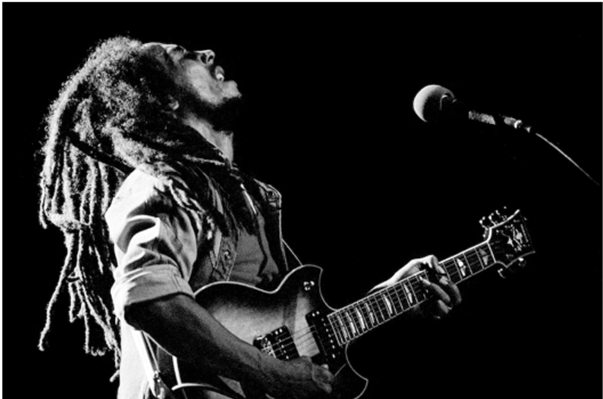
To paraphrase Bob Marley – and the UN – a hungry mob is an angry mob.
‘The head of the United Nations World Food Programme, David Beasley, said this week that ‘”if people can’t feed their children and their families, then the politics unsettles.” .…He warned that in 2023 the world will see mass food shortages.’ ‘The world is in the grip of a perfect storm. Food prices have been rising for two years after the impact of the COVID pandemic and disruptive weather patterns…Russia’s invasion of Ukraine has added to the crisis.’
Pardon the ‘french’ but sh*t is f**ked up. #TalkCollapse!
‘…coral bleaching, an insect apocalypse, cows dying from heat in the field and birds falling dead from the skies. Cut up two bananas and mix it all together with a million Hiroshima-sized nuclear bombs worth of heat per day in a planet-sized blender and you’ve got one f**ked-up Earth smoothie.’
The 1970s saw energy crises but is it the same now?
‘…from a biophysical, ecological point of view, we now inhabit a different world: in just 50 years, we have shifted from relative abundance to relative depletion and scarcity… think of it as the consequence of a one-time-only profusion of human population, innovation, and consumption enabled by a rapid influx of energy from fossil fuels…. a singular, self-limiting cycle—like a wildfire consuming all available fuel.’
Collapse is a process not a switch. There is lots to be done for socio-ecological justice between now and the grim end, and we achieve what we can, where we can, as a means of easing the descent.