By A/Prof Kate Booth
For the purposes of this article, let’s say anarchism is this:
‘Anarchism is, fundamentally, an ethical critique of authority – an ethical duty to question and resist domination in all its forms’ – Saul Newman
In classic anarchism, the questioning of power described by Newman comes with the idea that allowing the best of human nature to flourish and thrive through individual and collective liberation will see an end to oppression of all kinds; that structures of domination can be dismantled. In resisting oppressive structures, such as president v people, boss v workers, rich v poor, husband v wife, coloniser v colonised, these hierarchies can be replaced with flat structures and power-free modes of organising. In other words, that it is possible to build a world in which people think and act as if they are equal, negotiating opportunities and challenges in inclusive and equitable ways.
A world free of control and oppression is a nice idea and at times, in some places, things seem to work this way. Anecdotal accounts of NSW Police brutality during the Israeli President’s visit to Australia speak to diverse protestors spontaneously coming together to support and protect one another.
Yet promises of an anarchist utopia can appear far-fetched, not the least because it’s hard to see how authorities, such as the police, would passively give up the power they hold. In a complex globalised world, diverse voices also struggle to cohere and gain traction making such a utopia seem like a distant dream. In addition, attentiveness to different cultures, including many indigenous cultures with hierarchical modes of living and organising, indicates the possibility of imperialism embedded within the so-called liberatory premise of anarchism. For many, removing hierarchies – such as productive and relatively benign ones – could repeat and exacerbate the impacts and legacies of colonialism.
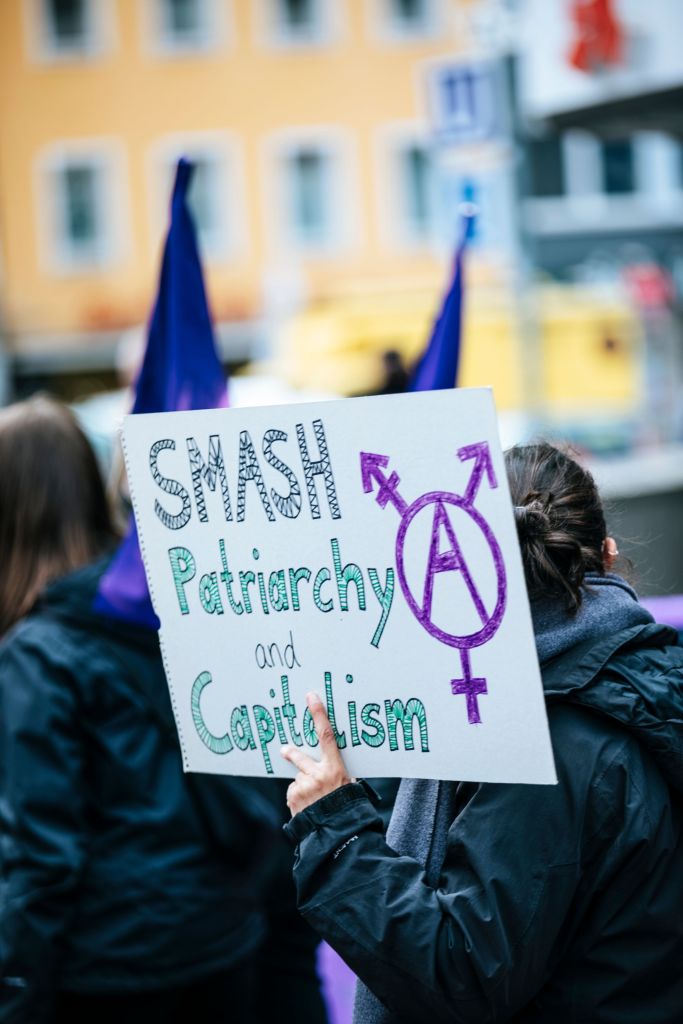
But just because classic anarchism faces challenges doesn’t mean that Newman’s point about challenging power and domination isn’t relevant. Addressing and mitigating unequitable power structures, particularly for those experiencing marginalisation and oppression, remains of the utmost importance. Which is where ‘post-anarchism’ comes in.
Post-anarchism embraces an ethical duty to question and resist domination in all its forms, but approaches this as a way of being rather than a means to an anarchist utopia. In other words, in post-anarchism, there is acceptance of the inevitability of power structures but not of the oppression and marginalisation that these can create. Questioning and resistance then become a way of thinking and acting in the world on an everyday basis. Mutual aid is a good example of this, especially when it goes hand in hand with broader political activities. For example, during the ICE crackdown in Minneapolis, mutual aid networks acted in concert with street demonstrations and other forms of resistance.
As German activist Tadzio Mueller writes, post-anarchism ‘is the simultaneous negation of things as they are, the anger that flows from viewing the world as riddled with oppression and injustice, and the belief that this anger is pointless if one does not seek to do something different in the here and now’.
In many ways, post-anarchism is about living between worlds – between the dying, collapsing world of global capital and climate-ecological destruction and the unknown future worlds of disparate people and places created as collapse intensifies and unfolds. Many find themselves inhabiting two worlds at once – in one world oppressed by capitalism and imperialism and in another world sustained (even if marginally) by the very same processes.
In Lutruwita, this sense of being in two worlds can feel like having each foot in two places. For instance, many Australians have a colonial-settler heritage meaning complicity in the oppression and marginalisation of indigenous Australians and some with this heritage also adopt a decolonising worldview – one foot in colonialism and the other in decolonisation. Or, one foot in an aisle in Woolies and one in a dumpster, a foot in Bunnings and the other locked on in a clear-fell coupe, a foot in Big Pharma and the other in self-care, one foot in superannuation and one in community building, one foot in a private school education and the other in freeganism, one foot in taxpayer funded genocide and the other on the streets resisting.
Post-anarchism speaks to intersectionality – not only about shared qualities that lead to marginalisation and oppression, such as being trans and Black, but about an intersectionality in which the oppressor and the oppressed can share the same body and must, ultimately, share the same spaces and places. In these in-between spaces, solidarity is less about unity based on common cause and more about the on-going negotiation and mitigation of power amongst diverse peoples and priorities. How to mitigate the strength of a deep male voice in a community meeting? How to run a free market dependent on consumption and excess but aiming for equity and inclusion? How to moderate the misogyny of a man homeless for most of his life during a shared meal? How to find motivation and agency for change, whilst recognising complicity in systems of domination and control?
Post-anarchism doesn’t come with a symbol or a banner of its own – it’s part of the diversity approaches that make up anarchism more generally. But it is useful to talk about what post-anarchism is and what it means as this can provide a deeper understanding of politics and power, a clearer articulation of ideas and identify, a more effective way of handling critiques and criticism and, ultimately, better outcomes in tackling oppression and marginalisation.
Sources and readings
Newman, Saul (2011) Postanarchism: A politics of anti-politics. Journal of Political Ideologies 16(3).
Rousselle, Duane and Even, Süreyyya (2011) Post-anarchism: A reader. Pluto Press.
White, Roger (2005) Post colonial anarchism. The Anarchist Library.
Kate is an activist academic, lecturing in geography and planning in the School of Geography, Planning, and Spatial Sciences at the University of Tasmania. She is co-founder of Just Collapse – an activist platform dedicated to socio-ecological justice in face of unfolding and irreversible global collapse.
This article was originally published in the LAMA Collective journal (Volume 1).

